I hate charity. Not the greek derived word for love, but the "charity" that means giving people money. Two nights ago, I was listening to the BBC and the announcer (in perfect British English, which I can only dream of speaking) said that a group of the world's richest people are pledging percentages of their salaries (up to 50% in some cases) to international aid/ charity. How sweet! I just got mad (according to the American meaning).
I have been here in Uganda for a year. It is a land where foreigners are looked at as walking ATMs (because many of them are) and people have been taught that they cannot rely on themselves.
I get it, I really do. When I was a kid, I knew that my family was poorer than any of our relatives and that is why our relatives gave us stuff. That is why I always expected stuff from them. Did I value the expensive new clothes and shoes that were given to me? No, I just expected them. Was I grateful? No. Did I appreciate that it was also a sacrifice for my relatives to do this for me? No-- not until I was older. I was jealous of everyone and thought that they all had better lives than I did. I know people, in my family, who still look on others, including me, this way. They think that they are irreversably, unequivocably poor and can't do anything about it. They aslo believe that everyone else is automatically better off and should give them stuff and take care of them.
If Carnegie and Rockefeller would have obeyed anti- monopoloy, fair wage, and environmental conservation ethics, we probably would not have recieved Carnegie libraries and the Rockefeller foundation would not exist. Maybe, however, we would have fewer pollution problems and more of our grandparents would have been able to fulfil their dreams. Maybe workers for these guys (and the small businesses that would not have been knocked out of the market) would have been able to build their own libraries and start their own charitable groups. Maybe we would have never needed their charity.
I just feel the same way about charity in Uganda and all over the world. It's like knocking out people's legs and then subsidizing the cost of prosthetics. This does not take into account the incredible loss of humanity that results from person(s) believing that they are fundamentally infereior to and dependent upon others.
I don't like charity because of what it does to people. It justifies the excesses of wealth and at the same time dehumanizes the poor. In fact, it has nothing to do with the real word-- it is not charity.
Friday, August 6, 2010

Sunday, July 4, 2010
Love in the time of Malaria

I will soon be going home because of my brother’s wedding and I have just heard that a friend at home has finally found a good boyfriend. On facebook, friends’ pictures are colliding together as two become one both in and out of matrimony. On this side of the Atlantic, love is also in the air. I’m not just talking about Peace Corps, where most of the single males were paired up before the plane from New York hit Entebbe airport; or the females, while outnumbering pc guys, still manage to find significant others in significant numbers. I am also talking about the girls at my school, who, surrounded by walls, fences security guards, and nuns, still manage to get pregnant while fetching water or while visiting home, or in other mysterious ways (i.e. eluding the nuns at night to jump fences and climb walls). I am also talking about the guys on taxis or in Kampala who say things like “I love you, I want to marry you!” or “You’re my size, I want to marry you” when they don’t know my name.
I understand the love between my brother and his fiancé a bit. They finally found the one they wanted to spend their lives with; their best friend, and they want to be with each other. I get that. I don’t, however, always understand the thing called “love” in Uganda.
Love in Uganda, I have learned, is not always exclusive. A man loves you, me, and all the other women in the world at the same time and it means absolutely nothing. When a guy proposes marriage to me, he is probably serious. He would marry me, and continue marrying others. Many women, however, believe this crap. (yes, I wrote the word, because there is no other word for it). They jump the fence. They become pregnant or get AIDS from these men that care nothing for them.
Love in Uganda, furthermore, is also not necessarily affectionate. Married people do not really associate with each other or show any public affection. A man and woman can hold hands, sit together, travel together, etc. as long as they are not married. If they are married, they don’t get within ten feet of each other or even seem to look at each other in public. When I think of women in Uganda, I don’t just feel bad that they have to carry water on their heads or do so much manual labor. I just think of how they are not held, caressed, wooed.
Love in Uganda is also unequal. Men, for example, are not looking for weak women to take care of. They know women are strong and can earn more than themselves in some cases---- and they like it. Many men, in fact, do not support their wives; they only demand work and money (you have to give your husband all your earnings)
The worst part about love in Uganda is not the Ugandans; it is the bazungu (whites). It is not uncommon to see an old, white haired white guy with some young Ugandan girl that has tight clothes, high heels, and too much to drink. Most of the time, these same guys are the ones getting your money when you contribute to campaigns trying to “end world hunger” or “empower women.” Well, at least the girl in heels gets a good meal, and if she’s drunk enough, she might feel a little powerful—who knows?
With all of this craziness, I have to ask; where is love in Uganda? Love is for the community, the society. Love is what makes men support nieces and nephews and distant cousins through school. Love makes the local council leaders work hard to keep their communities stable and peaceful. It makes people stop the middle of their work to chat with a neighbor or just an acquaintance. Love is also what makes the responsible fathers support their girls through school, even though such girls, at times, run away with boyfriends. Love is what keeps my neighbor from marrying, because she knows she has to support her dying sister’s children.
As you may have guessed, I have not found romance in Uganda, nor do I plan to. I have, however, found love; in the responsible, hard working people why try to move their families forward.
I understand the love between my brother and his fiancé a bit. They finally found the one they wanted to spend their lives with; their best friend, and they want to be with each other. I get that. I don’t, however, always understand the thing called “love” in Uganda.
Love in Uganda, I have learned, is not always exclusive. A man loves you, me, and all the other women in the world at the same time and it means absolutely nothing. When a guy proposes marriage to me, he is probably serious. He would marry me, and continue marrying others. Many women, however, believe this crap. (yes, I wrote the word, because there is no other word for it). They jump the fence. They become pregnant or get AIDS from these men that care nothing for them.
Love in Uganda, furthermore, is also not necessarily affectionate. Married people do not really associate with each other or show any public affection. A man and woman can hold hands, sit together, travel together, etc. as long as they are not married. If they are married, they don’t get within ten feet of each other or even seem to look at each other in public. When I think of women in Uganda, I don’t just feel bad that they have to carry water on their heads or do so much manual labor. I just think of how they are not held, caressed, wooed.
Love in Uganda is also unequal. Men, for example, are not looking for weak women to take care of. They know women are strong and can earn more than themselves in some cases---- and they like it. Many men, in fact, do not support their wives; they only demand work and money (you have to give your husband all your earnings)
The worst part about love in Uganda is not the Ugandans; it is the bazungu (whites). It is not uncommon to see an old, white haired white guy with some young Ugandan girl that has tight clothes, high heels, and too much to drink. Most of the time, these same guys are the ones getting your money when you contribute to campaigns trying to “end world hunger” or “empower women.” Well, at least the girl in heels gets a good meal, and if she’s drunk enough, she might feel a little powerful—who knows?
With all of this craziness, I have to ask; where is love in Uganda? Love is for the community, the society. Love is what makes men support nieces and nephews and distant cousins through school. Love makes the local council leaders work hard to keep their communities stable and peaceful. It makes people stop the middle of their work to chat with a neighbor or just an acquaintance. Love is also what makes the responsible fathers support their girls through school, even though such girls, at times, run away with boyfriends. Love is what keeps my neighbor from marrying, because she knows she has to support her dying sister’s children.
As you may have guessed, I have not found romance in Uganda, nor do I plan to. I have, however, found love; in the responsible, hard working people why try to move their families forward.
Sunday, June 20, 2010
A Life Poured Out
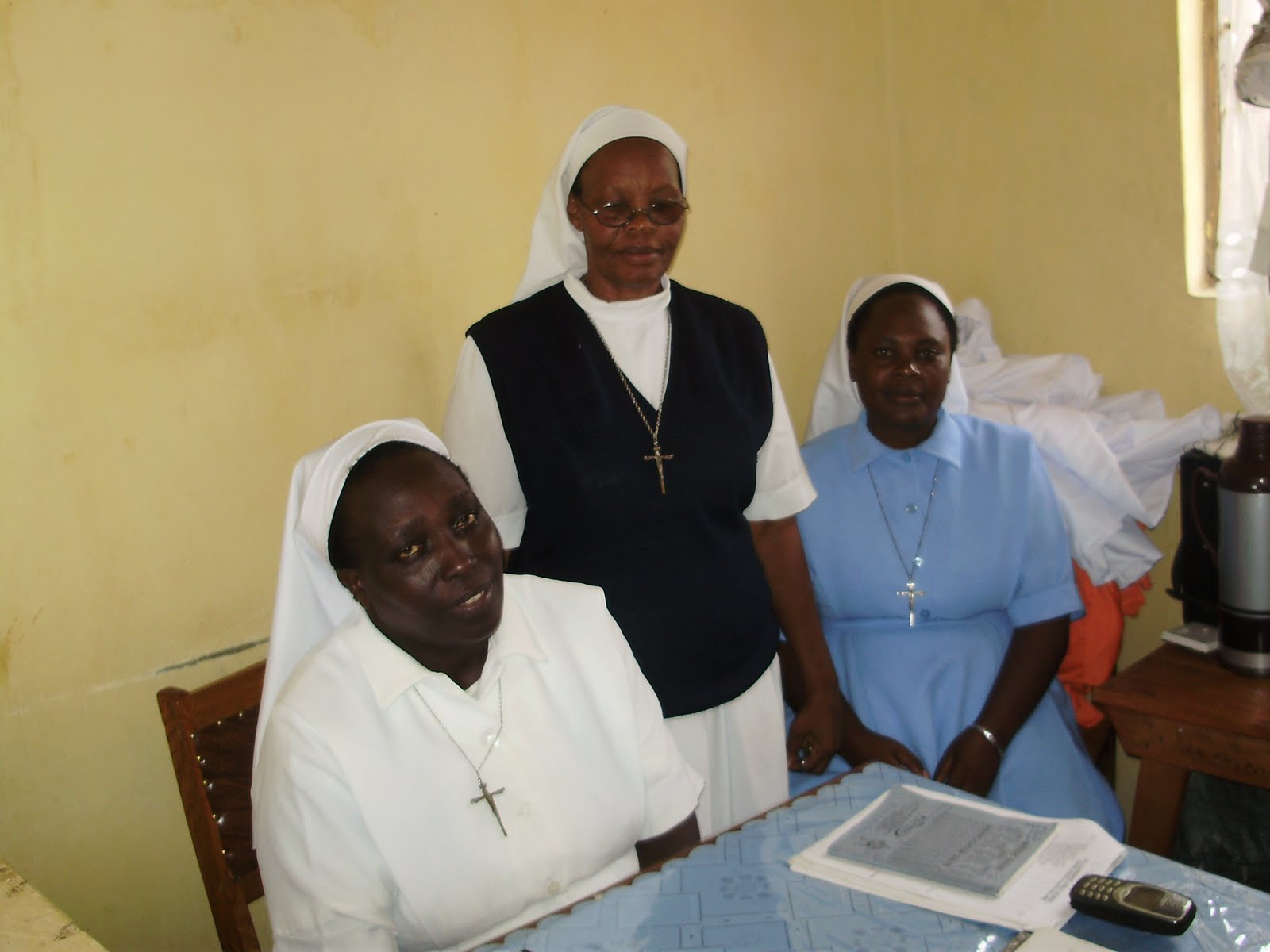
As you know, I've been living with sisters for almost a year now. I have been able to observe and take part in their daily routines, see their moments of humanity, and witness the sacrifice of their lives. They live by three vows; poverty, chastity, and obedience. The poverty is cool-- they are not obsessed with stuff, and although they are really good at getting cute shoes that match with cute handbags, they really don't bother with material things. A few months ago, one of our sisters moved to another place. She carried two suitcases-- one of books and the other of clothes. That was all.
The chastity-- well, when I see the way men are-- I don't think it's a big deal. After all, the sisters are not sitting at home with a bunch of cats and swooning over Harlequin romance novels. Sincerely, they don't seem to care much about men at all (although they have made some recommendations about who they think would be good for me-- don't worry, he was an American).
But the third, the most difficult one, is the obedience. Their lives are really poured out, broken. Not sold for the poor but poured only at the feet of Christ. They must really believe that He is and that He is God or else it would seem such a waste. They can never recover the years they have spent. They cannot choose their careers, or where they will be. They must do what the order tells them even if it is very difficult. One sister who used to be a principal in her past assignment is serving as a primary teacher now and must put up with her school's poor administration even though she knows she could do it better. Another has a hard time with the local language and the people (she is from a different region), but must stick it out here.
These women have offered their lives as a fragrance to God. We may see this and call it a waste. We may wonder whether their talents would be better used elsewhere. But really, if they were not sisters, who would  they be living for? Themselves? Would that be so much better?
 they be living for? Themselves? Would that be so much better?
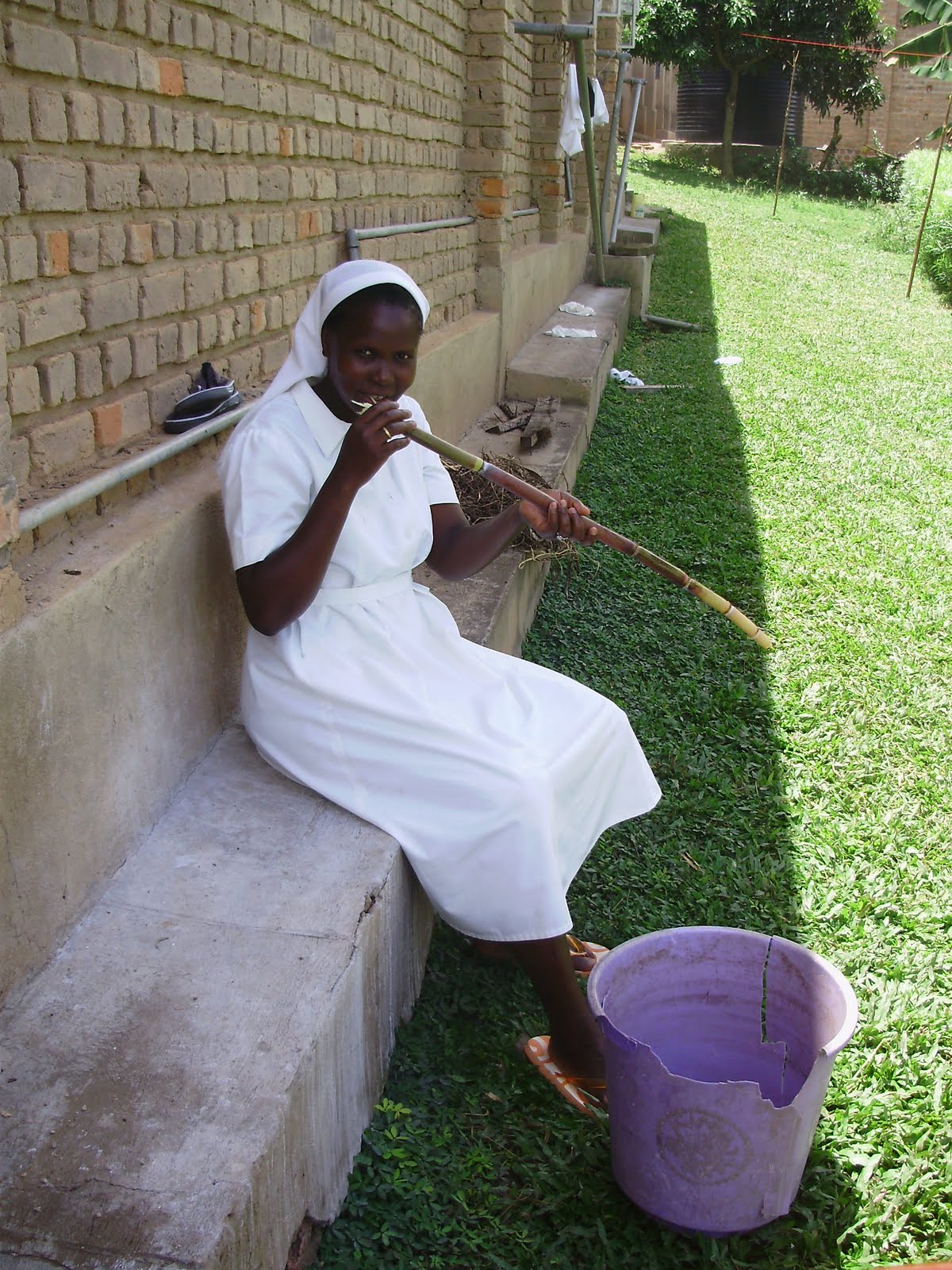
 Yes, sisters are people. They eat sugarcane. They iron their habits. We dance, we sing, we tell stories around the dinner table. In communities where they have tv, some watch soap operas. But in the end of the day, at the back of the mind, there is a meditation, a reflectiveness, a purity. They are never very far from Christ.
Monday, June 14, 2010
Veni Sanctus Spiritus

The other week, Pentecost Sunday came, with a late night vigil and silence, followed by praying in tongues, shouting, and dancing. What impressed me was the unity I saw and that I continue to see in the Catholic Church. Those who did pray in tongues were free, as were those who didn't. Those who didn't dance and shout had patience for the extra hours we spent in church waiting for those who did. At such moments, people used to say they felt God's presence. I never knew what they meant, but I know that God was there in the unity different people had with each other.
Similarly, last weekend, Sister Margaret and I were in Kanoni. A small trading center (smaller than my home trading center) with a smaller church, we went to organize a men's group. We arrived on Saturday at 10:30 AM. Two old men were present. Soon, two younger men came. We waited to begin until 12:00 when we realized that no one else was coming. After talking about the purpose of the organization and doing a group session on the culture of manhood, its' positive impacts, and it's negative possibilities, we had lunch. It was 3:30 pm. We then walked around town visiting people and began our next session with the men at 5:00pm.
At the strengths and needs session that was done afterwards, the Holy Spirit came. No one was praying or dancing or shouting. Instead, more importantly, there was an incredible unity. The man who was an expert farmer was identified, as was the business man. The farmer stated that he had no market for his crops, the business man identified other, more profitable produce options. The farmer knew of improved growing methods. The following day, both men helped one of the old men to prune his banana and coffee plantations then they agreed to continue helping him. The teacher took notes and the following day, came to my trading center to fill out the forms. Yes, only four men, but there was another one there. One that gave them such unity, such strength in their togetherness that they can do great things. This weekend, in a banana plantation with four men pruning trees, the Holy Spirit came, and I can tell you that He was there.
Thursday, June 10, 2010
Stupid

I feel so stupid, and it is the best way to feel. I am spending a week in Kampala with five other Peace Corps volunteers evaluating our program and training. When I joined Peace Corps, I thought I would be surrounded by people just finishing BAs with no knowledge about the broader world. How wrong I was. In this series of meetings, I felt the same way I did in ninth grade biology, in AP English, and in my first semester of grad. school—stupid. Not only are there some amazing credentials here—one Harvard biochemistry Ph.D., one former pro baseball player, one rising entrepreneur, several competent engineers and nurses; in short-- several people much more well informed about the world than I. In the past, when I knew I was behind, dug in my heels and really worked. It was during those times that I learned and grew the most. Yeah, my pride might have been hurt and my self- confidence questioned, metamorphosis pains. I don’t want to be at a place where I don’t feel challenged, where I am the smartest. I’ve had those too—glass aquariums, they limited my environment, my perspective, stunting and retarding. In short, I am stupid, and hope I never change.
Human

One of the biggest compliments that Sister Delphine can give a person is that “S/he was so human.” This threw me a few times until I learned that she meant humane. Either way, however, it has been a challenge. It is so easy to become consumed in oneself, even for a Peace Corps volunteer. In fact, even though they are supposed to be engaged in international service, most PCV’s (myself included) have difficulty going out of their way in the slightest manner for someone else. After being walked home by some very kind fellow volunteers last night, the same people that helped me to find a bike and have gone out of their ways multiple times, I thought about the importance of humanity in life. Even here, even in Peace Corps, it is necessary to question, what are my motivations? Who am I living for? Do I love my neighbor as myself?
The most giving, selfless volunteers are not the most outgoing or popular ones, but those that have only a few good friends. I have about three close Peace Corps friends, and I used to think I was being very hostile to everyone else. I cannot, however, be “human” to all the other PCV’s (about 200 in country), but I can focus on those few friends. After all, I am human!
The most giving, selfless volunteers are not the most outgoing or popular ones, but those that have only a few good friends. I have about three close Peace Corps friends, and I used to think I was being very hostile to everyone else. I cannot, however, be “human” to all the other PCV’s (about 200 in country), but I can focus on those few friends. After all, I am human!
Tuesday, May 25, 2010
Lifespan

(left: a motorcycle driver riding across an incredibly short term bridge)
According to the World Bank, the average life span in Uganda is 53. In Lesotho, it is 45 years. In the US, it is 78 years. These numbers are not merely statistics from books and from online. They are engrained into our souls as the measure of value we have for other’s lives and for our own. They are reflected in Americans’ multiple safety regulations and equipment pieces for each activity. They are reflected in Uganda’s bare footed toddlers playing in street gutters. They are reflected in the speeding, sometimes drunk, taxi drivers and the careless motorcycle drivers. They are reflected in the maternity wards where women are beaten by midwives to push must push even when the baby is wrongly positioned. They are reflected in the way that malnourished children with protruding bellies and ringwormed heads are normal. The other day, I was with a sister and a woman from the parish. They were talking about a village catechist and the woman said that the catechist’s child died a few years ago. The sister asked about the child’s age and the woman replied ten years. The sister then asked why the woman mentioned it and the woman said that this was no ordinary 10 year old, but that the boy was extremely bright and extra- ordinarily hard working. Lesson: if he had been normal, his death would have been a relative non- event, not worth remembrance. Another Peace Corps volunteer told me that a woman in her village related a story about being in a taxi that crashed. As the woman told the story, she laughed. The volunteer asked why she laughed, and the woman replied that she laughed because she was the accident’s sole survivor. They say that in Uganda’s fishing villages have HIV/AIDS infection rates of up to 80%. People, however, say that the water kills more quickly than AIDS, so why worry about getting the virus? It reminds me of Lesotho’s shepherds and miners, who, with hard work, hunger, and disease, were dying quickly. Their fear of HIV/AIDS, therefore, was diminished. The Pentecostals must have something here when they say you get what you believe. Many shepherds and miners believed they were going to die quickly and had better enjoy life now-- this translated into the world's second highest HIV/AIDS rate (around 30%) and their predictions proved more true than ever! Being here, I am still committed to living well into my 70’s and feel as if I have two lives while those around me only have one—at the same time, I am one of the only people around me wearing a bicycle helmet, watching what I eat, drinking water, sleeping under a mosquito net, and, in short, working toward the living of those two lives.
According to the World Bank, the average life span in Uganda is 53. In Lesotho, it is 45 years. In the US, it is 78 years. These numbers are not merely statistics from books and from online. They are engrained into our souls as the measure of value we have for other’s lives and for our own. They are reflected in Americans’ multiple safety regulations and equipment pieces for each activity. They are reflected in Uganda’s bare footed toddlers playing in street gutters. They are reflected in the speeding, sometimes drunk, taxi drivers and the careless motorcycle drivers. They are reflected in the maternity wards where women are beaten by midwives to push must push even when the baby is wrongly positioned. They are reflected in the way that malnourished children with protruding bellies and ringwormed heads are normal. The other day, I was with a sister and a woman from the parish. They were talking about a village catechist and the woman said that the catechist’s child died a few years ago. The sister asked about the child’s age and the woman replied ten years. The sister then asked why the woman mentioned it and the woman said that this was no ordinary 10 year old, but that the boy was extremely bright and extra- ordinarily hard working. Lesson: if he had been normal, his death would have been a relative non- event, not worth remembrance. Another Peace Corps volunteer told me that a woman in her village related a story about being in a taxi that crashed. As the woman told the story, she laughed. The volunteer asked why she laughed, and the woman replied that she laughed because she was the accident’s sole survivor. They say that in Uganda’s fishing villages have HIV/AIDS infection rates of up to 80%. People, however, say that the water kills more quickly than AIDS, so why worry about getting the virus? It reminds me of Lesotho’s shepherds and miners, who, with hard work, hunger, and disease, were dying quickly. Their fear of HIV/AIDS, therefore, was diminished. The Pentecostals must have something here when they say you get what you believe. Many shepherds and miners believed they were going to die quickly and had better enjoy life now-- this translated into the world's second highest HIV/AIDS rate (around 30%) and their predictions proved more true than ever! Being here, I am still committed to living well into my 70’s and feel as if I have two lives while those around me only have one—at the same time, I am one of the only people around me wearing a bicycle helmet, watching what I eat, drinking water, sleeping under a mosquito net, and, in short, working toward the living of those two lives.
Subscribe to:
Posts (Atom)